Prachachat Leader Urges Domestic Peace Talks for Deep South
Prachachat Party leader Pol. Lt. Col. Thawit Sodsong called for a self-reliant peace process in Thailand's southern border provinces during a teachers' football tournament in Narathiwat. He argued that mutual distrust forces reliance on Malaysian mediation, but domestic dialogue and compromise can resolve the conflict without foreign intervention. Thawit also highlighted the region's Malay identity and Yawi script as cultural assets, urged trilingual education, and cited stark economic and rule-of-law gaps with Singapore to push for investing in human capital over infrastructure.
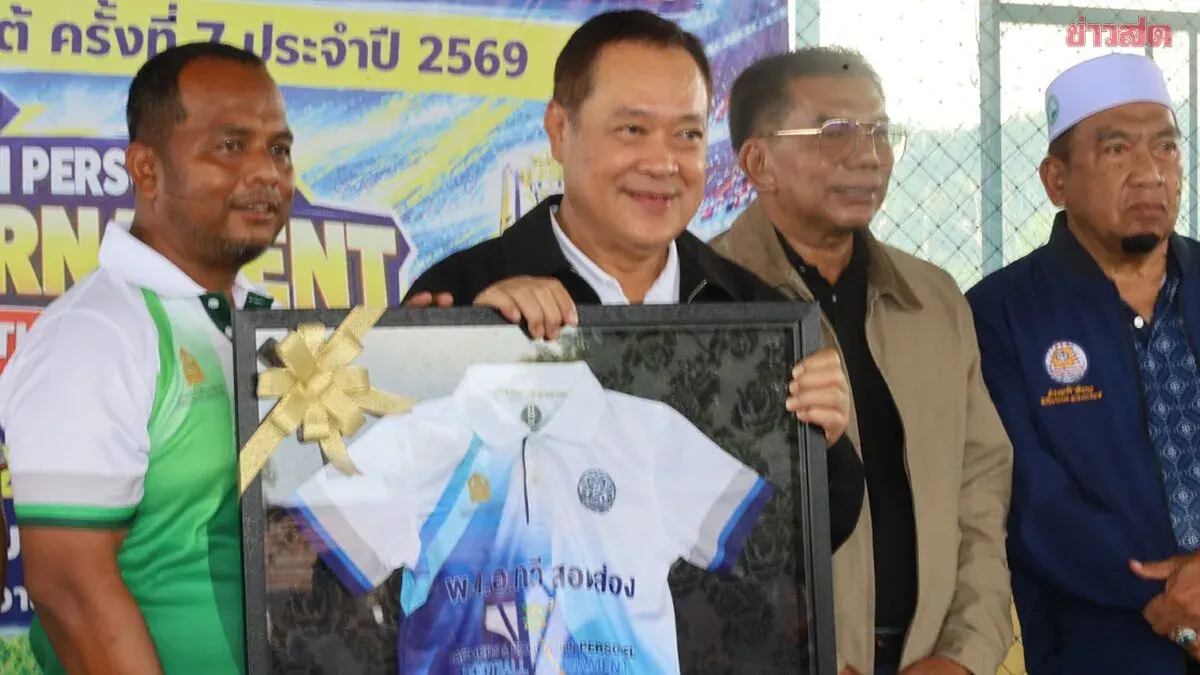
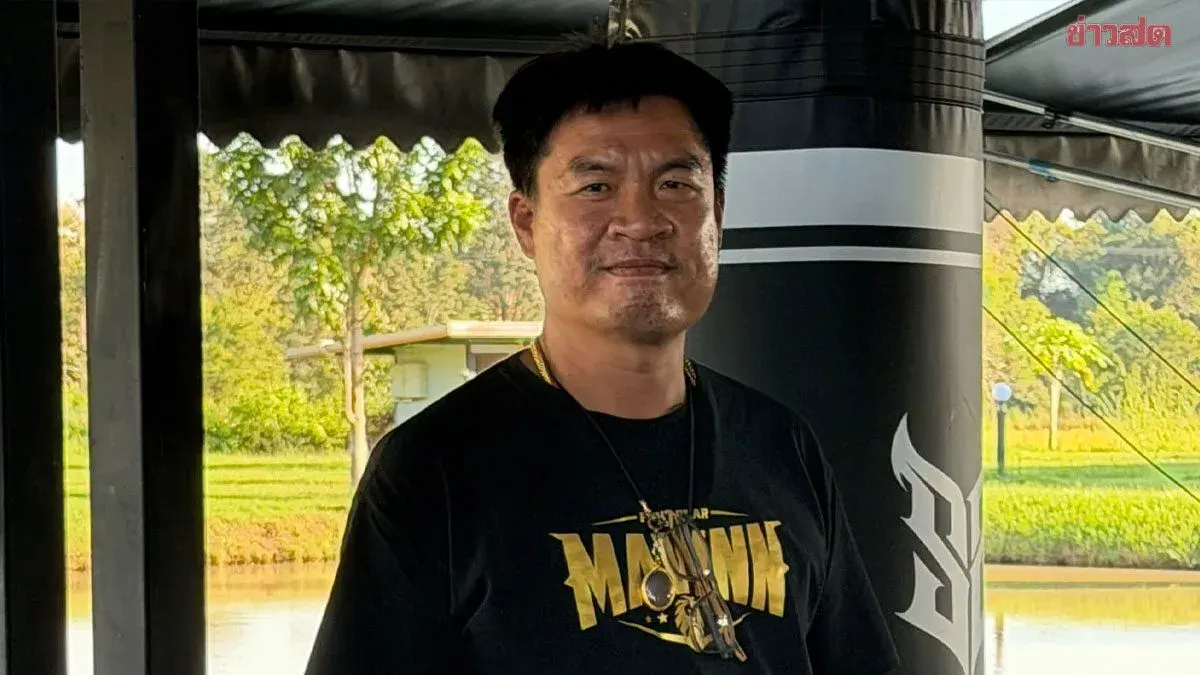
Pol. Lt. Col. Thawit Sodsong, party-list MP and Prachachat Party leader, presided over the opening of the 7th Southern Border Provinces Teachers' Artificial Turf Football Tournament at Naraphirom Park in Mueang District, Narathiwat, on October 24, 2026. Narathiwat MP Nakornsak Liewamo and teachers from the three border provinces gave a warm welcome.
In his opening remarks, Thawit presented a holistic strategy for solving problems and building peace in the southern border provinces, encompassing peacebuilding, human capital development, identity rights, and economic structure within security and peace-process dimensions. He identified mutual distrust as the key factor prolonging conflict, which leads to inviting foreign mediators. "Even peace talks — when we argue too much and don't trust each other, we bring in Malaysia as a mediator. Frankly, if we love each other and dare to compromise, letting everyone participate, we don't need to thank Malaysia; we can organize a dialogue process to find a way out together within the country," Thawit said.
On the socio-cultural dimension, the party leader noted that the three border provinces sit on the Malay Peninsula, where Malay is the main language and the unique Yawi script is a valuable cultural asset unmatched elsewhere. If the state shifts from suspicion to genuine promotion, this heritage could become a vital tool for economic linkage and communication with the region.
Education must align with local life and identity, adhering to four basic pillars: literacy, numeracy, and especially enabling youth to read and write in Thai, English, and Malay.
On the economy and justice, Thawit said peace cannot take root while structural inequality persists. He cited the World Justice Project's Rule of Law Index, which ranks Thailand 80th with a score of 0.5, while Singapore — smaller than Bangkok — sits in the top 10 with 0.7–0.8. Economically, Singapore's average daily income is about 4,000 baht with GDP per capita in the millions, whereas Thai workers still demand a 300–400 baht minimum wage, and per capita GDP in the three border provinces is only around 80,000 baht per year despite abundant natural resources. This clearly shows national prosperity depends on "quality of people," not resource quantity.
Thawit urged an urgent shift in state policy for the area: from pouring budgets into construction to investing in people through education, because teachers are the key leaders who change young lives — turning the unknowing into the knowing, the irreligious into the faithful, and those without a future into those with one.
Demographically, while Thailand faces an aging crisis with births below deaths, only the three southern border provinces still have birth rates exceeding death rates. Teachers there must therefore do more than teach; they must refine minds and spirits.