Bangkok Orange Line Eastern Section to Start Trial Runs December 2027
BANGKOK — The Mass Rapid Transit Authority of Thailand (MRTA) expects the eastern section of Bangkok’s Orange Line to begin trial operations for the public in December 2027, ahead of its planned launch of paid services in January 2028. MRTA Governor Kanchapoj Udomthamphakdee said construction of the eastern section, running from Thailand Cultural Centre to […]
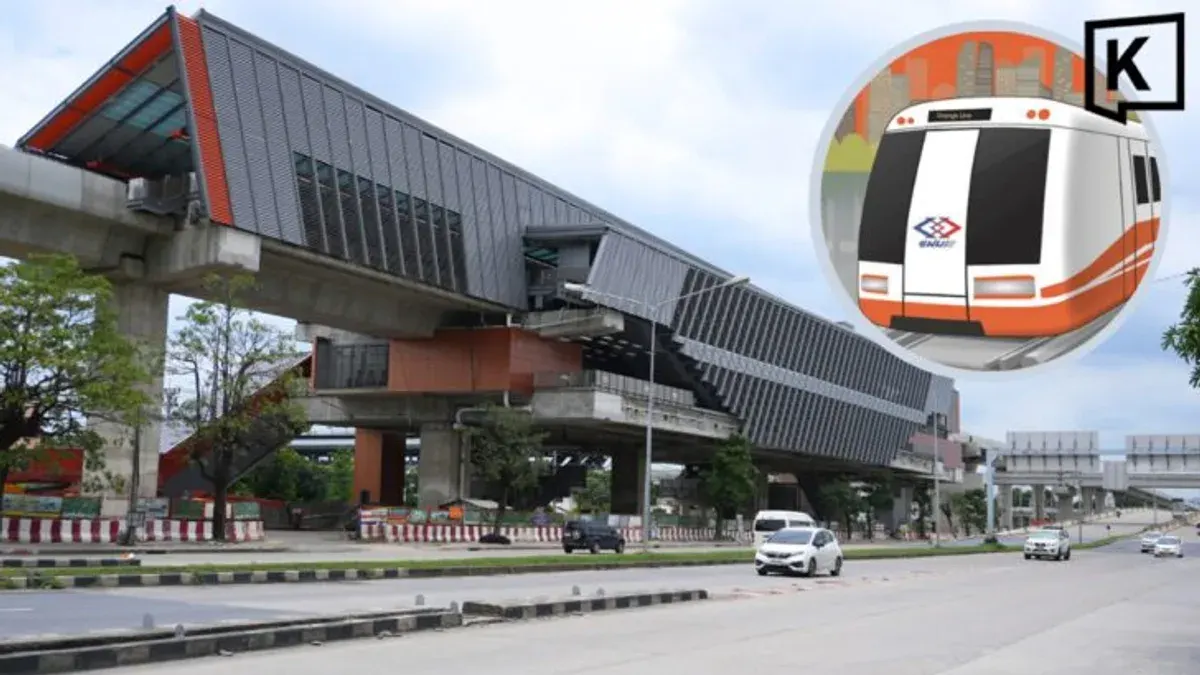
The Mass Rapid Transit Authority of Thailand (MRTA) expects the eastern section of Bangkok’s Orange Line to begin trial operations for the public in December 2027, ahead of its planned launch of paid services in January 2028. MRTA Governor Kanchapoj Udomthamphakdee said construction of the eastern section, running from Thailand Cultural Centre to Min Buri (Rom Klao intersection), is being accelerated, with the first train scheduled for delivery in November 2026 and the remaining trains expected to arrive by May 2027. The project will then undergo about six months of system testing and integrated trial operations before public trial services begin. The western section, connecting Bang Khun Non with Thailand Cultural Centre, remains under civil construction and is expected to open in 2030. The governor also provided updates on the southern Purple Line, which will run from Tao Poon to Rat Burana; civil construction remains on schedule for completion by the end of 2027, although the operating investment model and financial figures are being reviewed to align with government fare policies and plans for transferring project responsibilities. MRTA expects to seek approval for the investment model by late 2026 before submitting it to the Cabinet and selecting an investor, with full operations targeted for 2030 and the possibility of opening sections for trial runs in stages. MRTA is preparing to take over the Green, Gold and Red lines from the Bangkok Metropolitan Administration and the State Railway of Thailand, respectively, under the government’s policy to establish a single operator for the urban rail network, aiming to reduce overlapping responsibilities, improve operational efficiency and make rail travel more seamless. Preparatory work includes inter‑agency coordination and drafting memorandums of understanding to establish the framework and legal procedures for transferring the projects. The integration is also intended to improve connections between routes, service standards and the development of common ticketing and fare arrangements, and any transfer will require reviews of assets, contractual obligations, operating arrangements and the readiness of the agencies involved. Three other rail projects in Bangkok and its surrounding areas — the Brown Line, Silver Line and first phase of the Grey Line — are undergoing reviews of their feasibility studies to reflect changing economic and social conditions. The Brown Line, planned to run 22.1 kilometres from Khae Rai to Lam Sali in Bueng Kum and to have 20 stations, has completed its design but awaits integration with the Expressway Authority of Thailand’s Chalong Rat–Khae Rai expressway plan (formerly the N1 project), with the expressway section near Kasetsart University being reconsidered as an elevated route instead of a tunnel.