Thailand Orders Inspection of 200 Tonnes Aluminium Waste
Thailand’s Natural Resources and Environment Minister has ordered an urgent inspection of about 200 tonnes of aluminium dross waste in Samut Sakhon after public complaints. Initial tests showed low ammonia inside the storage area and none nearby, with water pH within normal range. Authorities are moving the waste indoors, repairing the warehouse roof, and continuing a legal investigation into hazardous material possession.
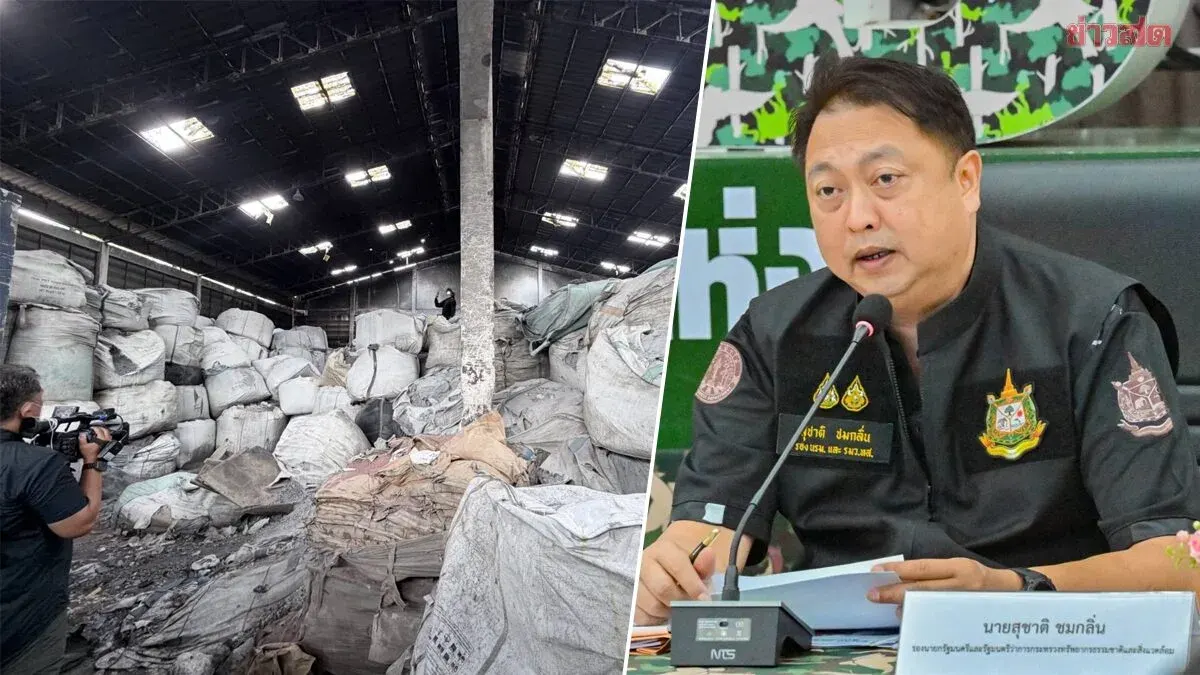
On October 16, 2026, Natural Resources and Environment Minister Suchai Chomklin directed the Pollution Control Department to urgently examine roughly 200 tonnes of aluminium dross waste stored inside and outside a derelict factory warehouse in Nadie Subdistrict, Mueang Samut Sakhon, Samut Sakhon Province, after receiving public complaints. He also ordered relevant agencies to cooperate in resolving the issue and preventing environmental and health risks. Pollution Control Department Director-General Surinthorn Worakitthamrong said that Office of Environment and Pollution Control Region 5, together with the Samut Sakhon Natural Resources and Environment Office, the Department of Special Investigation, the provincial Industry Office and other agencies, inspected air and water quality around the site. Ammonia gas readings at eight points inside the warehouse ranged from 0 to 5 parts per million, while no ammonia was detected at seven points located 100 to 500 metres away. Field water quality tests at two spots showed pH levels between 6 and 7. The agency advised that the waste be moved indoors, that the Nadie Subdistrict Municipality enforce building‑control regulations and repair the roof to stop rainwater from reaching the waste piles, noting that aluminium dross can react with moisture to produce ammonia. Regarding legal action, the Samut Sakhon Industry Office had previously inspected the site in April 2025 and the case of possessing hazardous material type 3 remains under investigation by the provincial police; Samut Sakhon Province pledged to expedite the probe to ensure proper management of the waste while reducing environmental and public‑health risks.