National Security Council Chief Defends Faster Southern Insurgency Response
The secretary-general of Thailand’s National Security Council rejected criticism from opposition politician Thavee Sodsong, saying the Internal Security Operations Command and the Southern Border Provinces Administrative Centre are constantly adjusting their tactics to counter the southern insurgency more quickly. He added that both agencies are working to boost public confidence and that the NSC is accelerating plans to win local trust, while daily coordination with the Prime Minister and military leaders continues.
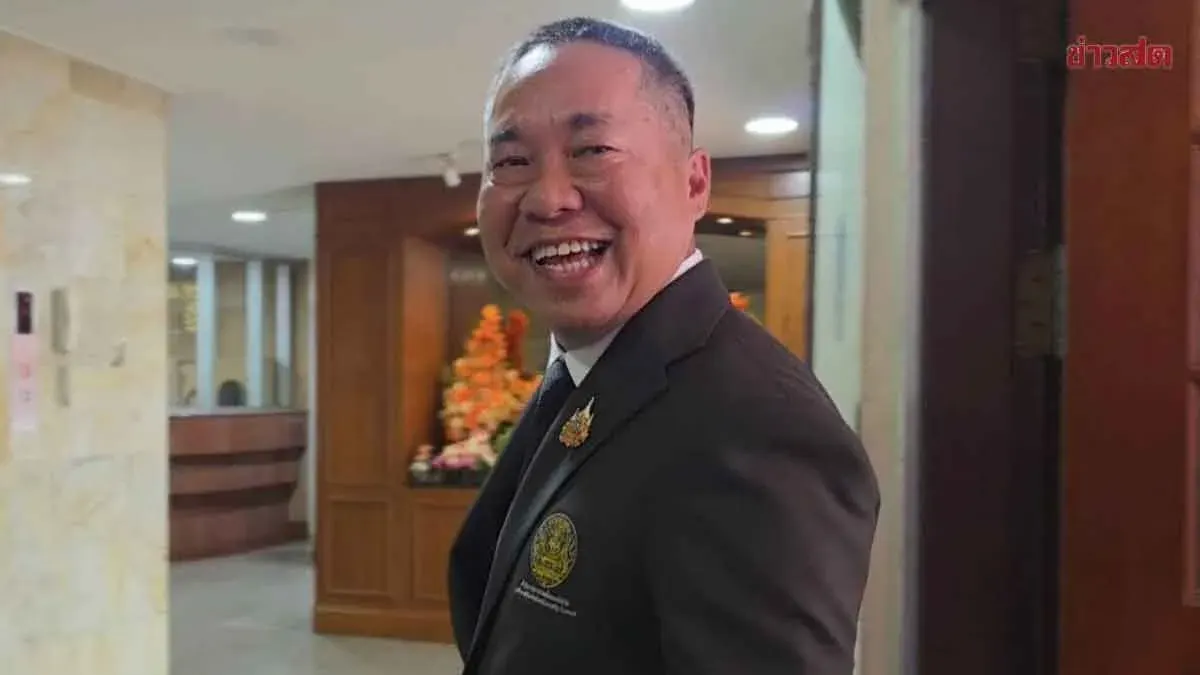
National Security Council secretary rebuts Thavee, affirms ISOC and the Southern Border Provinces Administrative Centre are adjusting their approach to counter the southern insurgency, responding faster and building public confidence, stressing that the NSC is expediting a plan to win trust of local residents. At 10:50 a.m. on October 19, 2026, at Government House, General Chaipreuang Duangphatthan, Secretary-General of the National Security Council (NSC), gave an interview regarding Pol. Lt. Col. Thavee Sodsong, list-MP and leader of the Prachachat Party, who criticized the handling of the deep-south problem and proposed redirecting the work of the Southern Border Provinces Administrative Centre (SBPAC) and the Internal Security Operations Command (ISOC) toward mass-engagement rather than security duties. He said that, based on information and reports, ISOC Region 4 Forward has continuously adjusted its working methods, but one must understand that perpetrators will act whenever they have the opportunity. Concerning SBPAC, the Prime Minister has urged swift implementation of existing plans, and on October 22 invited only the responsible and concerned officers for a further briefing, including discussion on the matter. He added that both agencies are working fully on counter-measures, responding more quickly and effectively, with the Fourth Army Region commander and the ISOC Region 4 Forward director emphasizing to troops that preventing attacks and conducting proactive operations are vital, which will improve situation control. All this takes time, as the issue has persisted for years, and we are now accelerating the prepared plan to reach more areas. For the NSC, we aim to turn public insecurity into trust and confidence, which requires time; the NSC is revising and devising proactive plans for use in 2026 as soon as possible. General Chaipreuang said the NSC, ISOC and SBPAC coordinate constantly, and he receives regular reports, speaking by phone almost daily, several times a day. When the Prime Minister asks what needs improvement, he can liaise directly. When asked whether resolving the deep-south issue must go hand-in-hand with peace-talk dialogues or require changes, the NSC Secretary-General said certainly, the head of the southern border peace-talk process has already discussed the way forward at all levels, and efforts must proceed together. The situation must be tackled from every dimension, and we must instill confidence among local residents. When asked if he would feel uneasy because the government is promoting reconciliation in the south while some political factions are steering the narrative and causing public confusion, the NSC Secretary-General replied that this is indeed a difficult matter; although we would not concede, explaining it to the public is hard, but we believe that if the situation improves and development increases, the benefits will be reflected back. When asked whether we still adhere to the principles of understand, reach, develop, he affirmed yes: if we achieve security to the point where development can proceed and the public cooperates, development will advance faster; currently we are stuck at this difficult point, but once we overcome it progress will speed up.