Civil Society Urges People's Party to Block Sin Tax Amendments
The user wants a short summary of the Thai article about civil society groups petitioning the Prachachon Party (opposition) to oppose four bills proposed by PM Anutin/Pheu Thai regarding sin tax fund allocation. Key points: civil society su
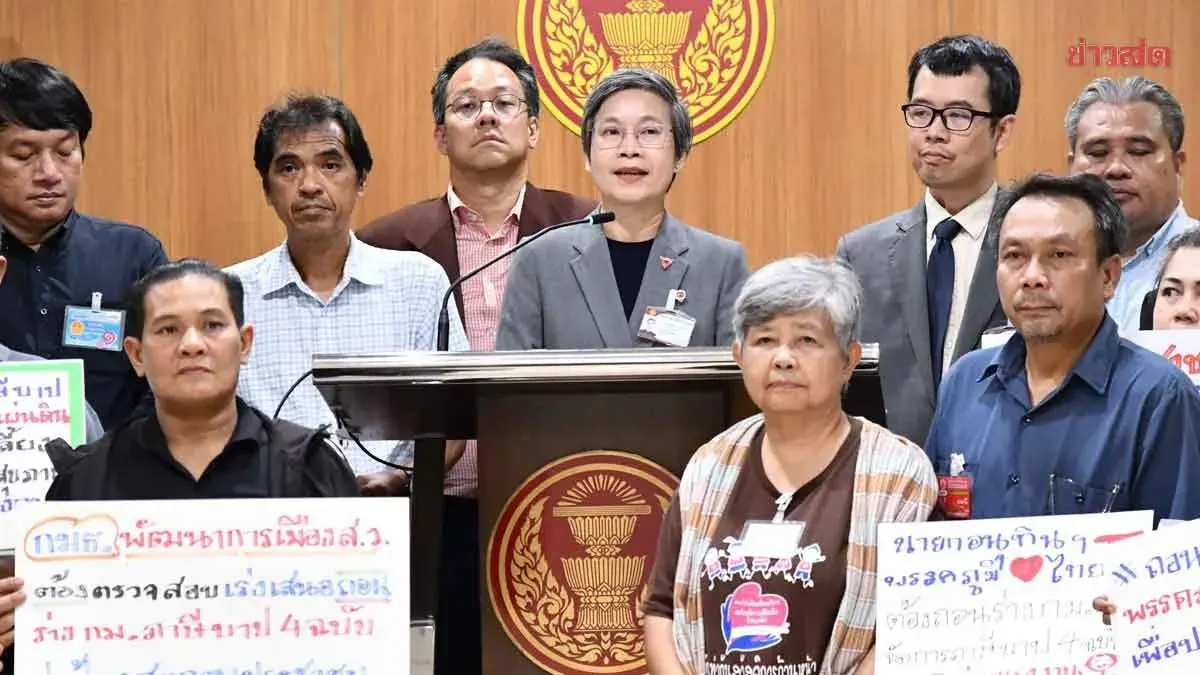
At 11:40 a.m. on October 21, 2026, at Parliament, civil society representatives submitted a letter to Natthaphong Ruengpanyawut, list MP and leader of the People's Party, calling on the party to declare its opposition and pressure the government and the Bhumjaithai Party to withdraw four draft amendments to royal decrees concerning four organizations that receive direct funding from specific excise taxes levied on alcoholic beverage companies and tobacco companies — the so-called sin taxes. People's Party list MP Natthaya Boonphakdee received the petition on behalf of the party.
Civil society representatives stated that the government's proposed legal amendments changing how the four organizations receive budgets from sin taxes would affect their work on health promotion, disease prevention, and media independence. They made four demands to the People's Party: 1) Declare opposition to the draft amendments and push for the government to withdraw all four bills from parliamentary consideration. 2) Establish an independent reform committee with representatives from all sectors, including civil society and labor networks, to enhance oversight and transparency without compromising independence. 3) Consider the impact on workers who rely on continuous health promotion and disease prevention. 4) Urgently address impacts on occupational health, safety, and security for informal workers and those with legal status issues.
They hope all four draft bills — sponsored by Prime Minister and Interior Minister Anutin Charnvirakul in his capacity as Bhumjaithai Party leader — will be withdrawn from parliamentary consideration.
Nitirat Thapphasombun of the We Fair network said the issue is not merely about budget reallocation but about power distribution, citizen mobilization, and public mechanisms. Amid growing public questions about the "blue-uniform regime," there is concern whether these amendments amount to a state capture benefiting alcohol and tobacco capital. He urged the People's Party, as the core opposition party, to use parliamentary mechanisms to scrutinize the bills, including a no-confidence debate.
Meanwhile, Natthaya said the party would take the complaint for further deliberation, acknowledging that public opinion on the four bills is divided between support and opposition, reflecting wide-ranging societal impact that requires careful joint consideration.