People's Party Leader Denies Rift, Urges Unified Political Voice
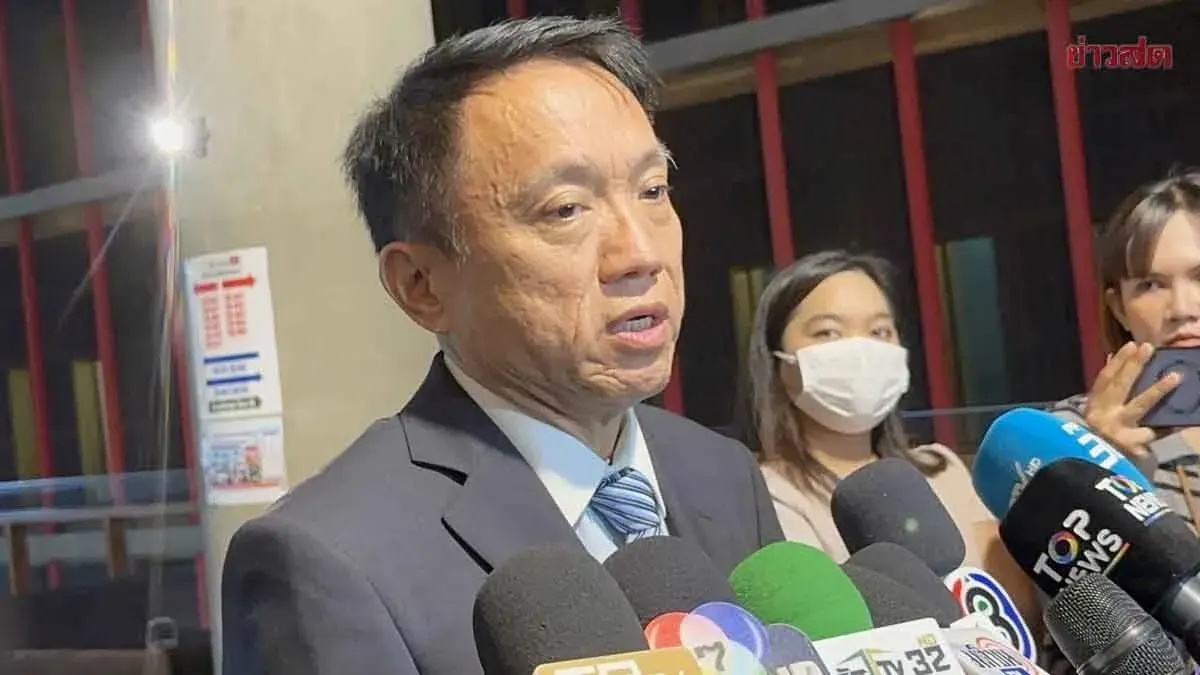
People's Party leader Natthaphong Ruengpanyawut denied the party is fracturing after leaked Line messages showed internal disagreements, calling such differences normal. He emphasized that while members have freedom of expression, public political communication must be unified to avoid giving opponents ammunition. Natthaphong said the issue would not impact the upcoming no-confidence debate against the government.

People's Party leader Natthaphong Ruengpanyawut dismissed rumors of internal cracks, stating that differing opinions are normal and internal debate is essential. However, he stressed that political communication must remain unified to prevent opponents from exploiting disagreements. Speaking at Parliament at 10:00 AM on October 22, 2026, Natthaphong Ruengpanyawut, party-list MP and People's Party leader, addressed rumors after Line group messages among party MPs were leaked. He confirmed that differing detailed opinions on any issue are completely normal, and the internal discussion stage is an important platform the party has always used to reach collective positions.
Asked how to make the party more unified, Natthaphong said unity does not mean representatives or members lose the right to express personal views publicly. As a mass party upholding liberty and democracy, everyone has freedom of expression. However, he noted that politicians, unlike other professions, must adapt: defining oneself as a People's Party member means political expression carries complex dimensions, such as the crack rumors. Some expressions could be twisted by political opponents into attack lines, weakening the party's political communication. Therefore, he believes all current party officeholders understand the regulations: as political representatives, they must communicate publicly in a unified voice and exercise restraint.
Asked whether this would affect the no-confidence debate, Natthaphong replied it would not, adding that the censure debate stage would be used to show Thai society that the current government's administration — called the 'blue regime' — is a threat to the democratic regime.