Rayong Coral Hatchery Releases Larvae Amid Low Survival Odds
Researchers at the Koh Mun Nai hatchery in Rayong are breeding coral from reproductive cells to boost genetic diversity and resilience, aiming to release larvae back into Thai seas despite a survival rate of just one in a million. The project relies on careful monitoring, natural algae‑controlling species, and strict water‑temperature control, with each coral needing up to five years to grow to a releasable size. Success depends on overcoming predation, bleaching, and rising temperatures.
The Department of Marine and Coastal Resources has opened a mission to restore Thailand’s seas; the Koh Mun Nai hatchery breeds and releases coral larvae back into Thai waters, noting that survival odds are only one in a million.
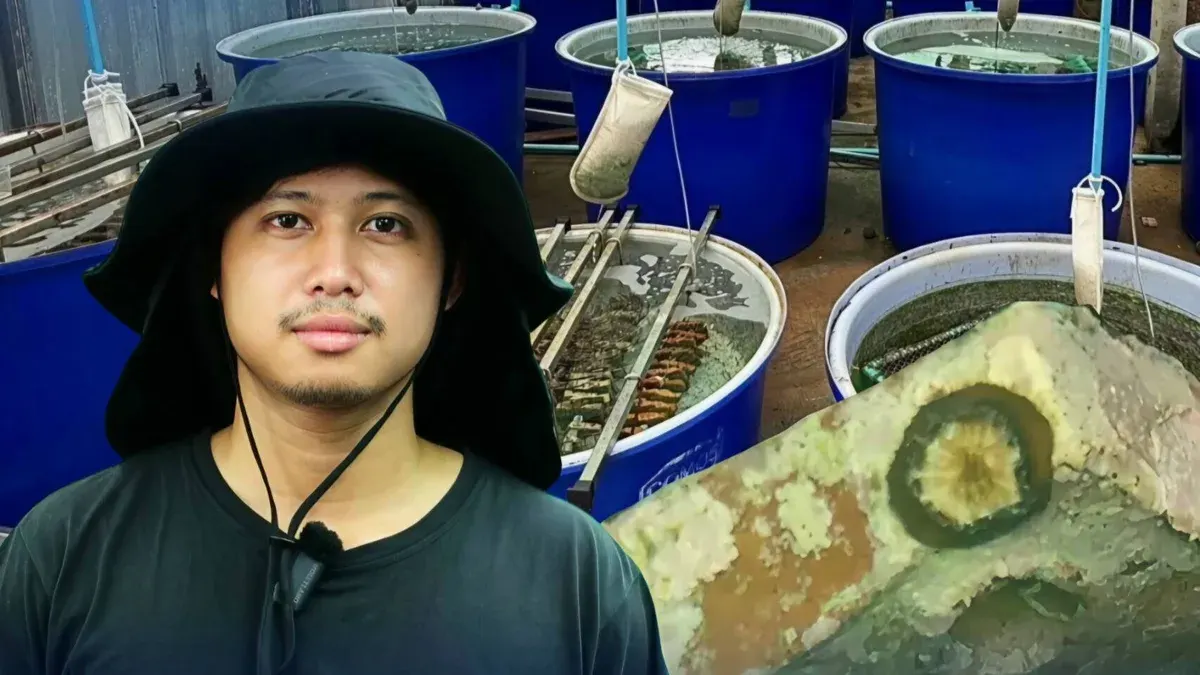
Thanaphol Pheuosungnin, known as 'iPhone', an independent researcher at the Eastern Gulf of Thailand Marine and Coastal Resources Research Center (Marine and Coastal Resources Department), disclosed the project to breed coral from reproductive cells at the Koh Mun Nai center in Rayong Province.
‘Corals in nature come in two types: those that release larvae directly and those that release reproductive cells. What we are doing is breeding coral from reproductive cells. The advantage is that it creates genetic diversity, helping them withstand changing environments better.’
Researchers must observe the colonies every 15 days to a month, checking the colour of the reproductive cells within the coral heads. When the cells turn pink, it signals they are ready.
Thanaphol said that each coral colony releases eggs only once a year, although a colony can release reproductive cells more than once on suitable nights, depending on species and conditions. He described the critical window: on the third to fifth night of the waning moon, between 6 pm and 9 pm, divers must go into the darkness to watch. Most of the eggs that float upward become food for fish.
‘After the coral releases its reproductive cells into the water, the eggs and sperm‑egg clusters face predation from many fish and invertebrates,’ he added. It then takes up to 96 hours for them to develop enough to settle. Survival odds in the wild are extremely low, compounded by bleaching events, rising sea temperatures, and harmful algae.
In the 50‑square‑metre hatchery on Koh Mun Nai, powered by solar panels, rows of one‑tonne breeding tanks hold more than 30 containers. Looking inside, you see brown tiles beginning to show speckles of one‑year‑old honeycomb coral, each only about one centimetre in diameter, spread across almost every tile.
All of this is the dream of ‘iPhone’ and his team of about ten coral researchers, because each coral larva that settles and grows to the size of a human fist takes about five years before it can be returned to the sea, and the chance of survival remains one in a million.
He said the painstaking care of these tiny lives—even after collecting thousands of reproductive cells—requires seawater that has been rested and filtered through green filter bags to remove sediment, and the water temperature must be kept steady at 28–29 °C, as corals are highly sensitive.
The biggest threat in the hatchery is not a dangerous animal but fast‑growing green algae and limestone algae that can overgrow and shade the corals to death. Instead of chemicals, the team uses natural controls, introducing ‘horse‑eye cowries’ and ‘rock‑fin fish’ into the nursery tanks with the tiles, letting them graze on the algae and act as tiny cleaners.
‘From a 10 × 10 centimetre tile, we must nurture the brain coral and plate coral for up to five years until they reach fist size—the optimal size for release. When we return them to the ocean, they will not only survive but become new parent colonies that spawn eggs to sustainably restore nature.’
When asked about the challenge of adapting to climate change, the researchers admitted that climatic conditions are beyond human control, but breeding the same coral species from many different parent lines to mix their genes helps build resilience.