Freshwater Runoff Strands Fish, Draws Crowds to Cha-am Beach
The user wants a short summary of the article, 1-2 sentences, 120-220 characters, max 240. Output only the summary text, no quotes, no markdown. Must be in English. Key points: Freshwater runoff ("nam bia") after heavy rain stranded fish al
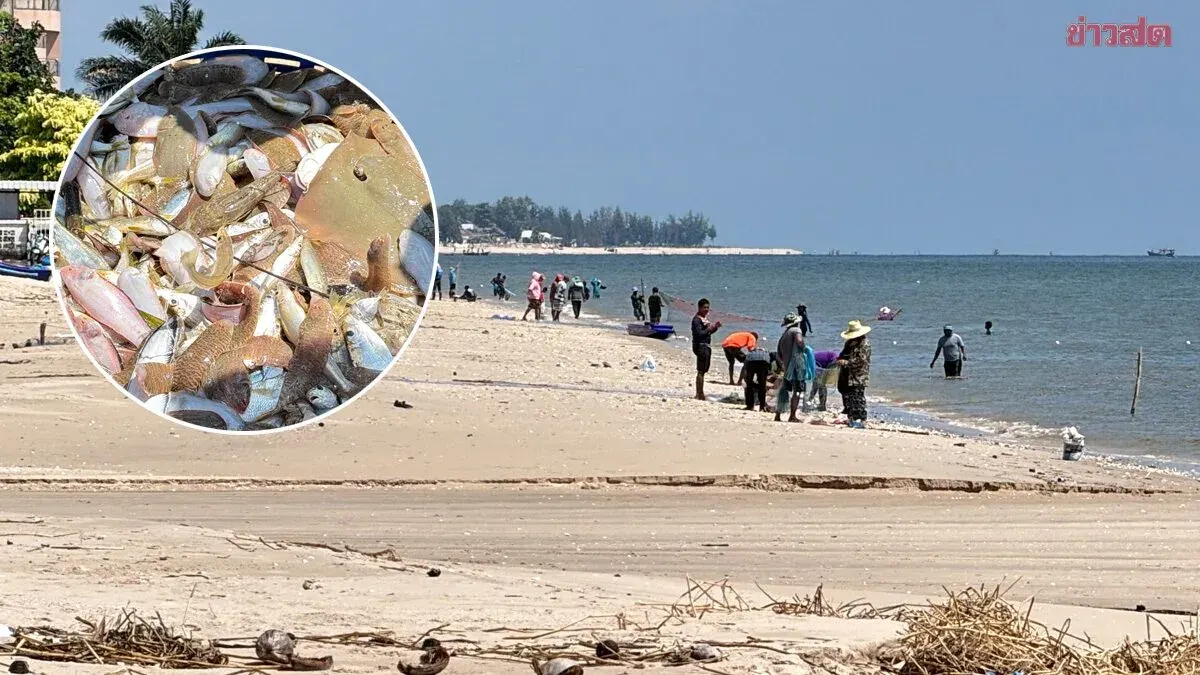
Phetchaburi – A phenomenon locals call "nam bia" (freshwater runoff) occurred in the Ban Klong Tian community on Cha-am Beach in Cha-am District, Phetchaburi Province, after continuous heavy rain in the area. The large volume of freshwater flowing into the sea caused many species of marine fish to float and be washed ashore in shallow water along more than 1.5 kilometers of coastline, drawing hundreds of villagers who brought cast nets, lift nets, and seines to catch fish in a lively scene.
On October 22, 2026, particularly in the Ban Klong Tian area of Cha-am Beach, crowds of people descended onto the shore to collect fish floating on the surface and along the water's edge. Some used cast nets while others encircled fish with lift nets and dragged them ashore, netting large quantities along the entire beachfront.
Species caught included large and small barracuda, sea catfish, sea bass, as well as shrimp and crabs. Notably, tilapia weighing about 2–3 fish per kilogram were also found, attracting particular attention. Villagers speculated these might have escaped from local fish farms after flooding washed them out to sea, though no official confirmation of the tilapia's origin has been made.
The term "nam bia" refers to the situation where massive amounts of rainwater flow into the sea, especially after prolonged heavy downpours, rapidly altering the coastal environment in terms of salinity, temperature, and water quality. This can affect aquatic species that cannot adapt quickly, causing abnormal behavior, floating to the surface, or being pushed ashore by currents and waves.
However, the sheer number of stranded fish alone cannot confirm that salinity change is the sole cause. Relevant agencies need to inspect water quality and the marine environment to determine the exact cause and assess ecosystem impact.
Meanwhile, the phenomenon has attracted many people to the beach to catch fish, but the public should exercise caution when entering the water and handling aquatic animals. They should avoid touching or consuming fish that are dead or show abnormal signs until the cause is known, and follow advice from fisheries and public health authorities.
For tourism at Cha-am Beach, visitors should closely monitor announcements from local agencies, especially if abnormal water quality is detected or marine safety warnings are issued. The duration before conditions return to normal will depend on the volume of freshwater entering the sea, weather, currents, and agency inspections.
This event not only created a stir at Cha-am Beach but also reflects the potential impact on coastal ecosystems following heavy rain and runoff, requiring close monitoring for the safety of the public, tourists, and marine resources in the area.