IMF Praises Thailand as Excellent Host, Urges Local Spending
IMF Managing Director Kristalina Georgieva praised Thailand as an outstanding host at the World Bank‑IMF annual meeting in Bangkok and urged participants to spend locally to support communities. She warned that rapid AI‑driven changes require proactive fiscal and monetary policies that sustain growth while building resilience. The IMF also unveiled an AI Preparedness Index to help members assess readiness for the AI economy.
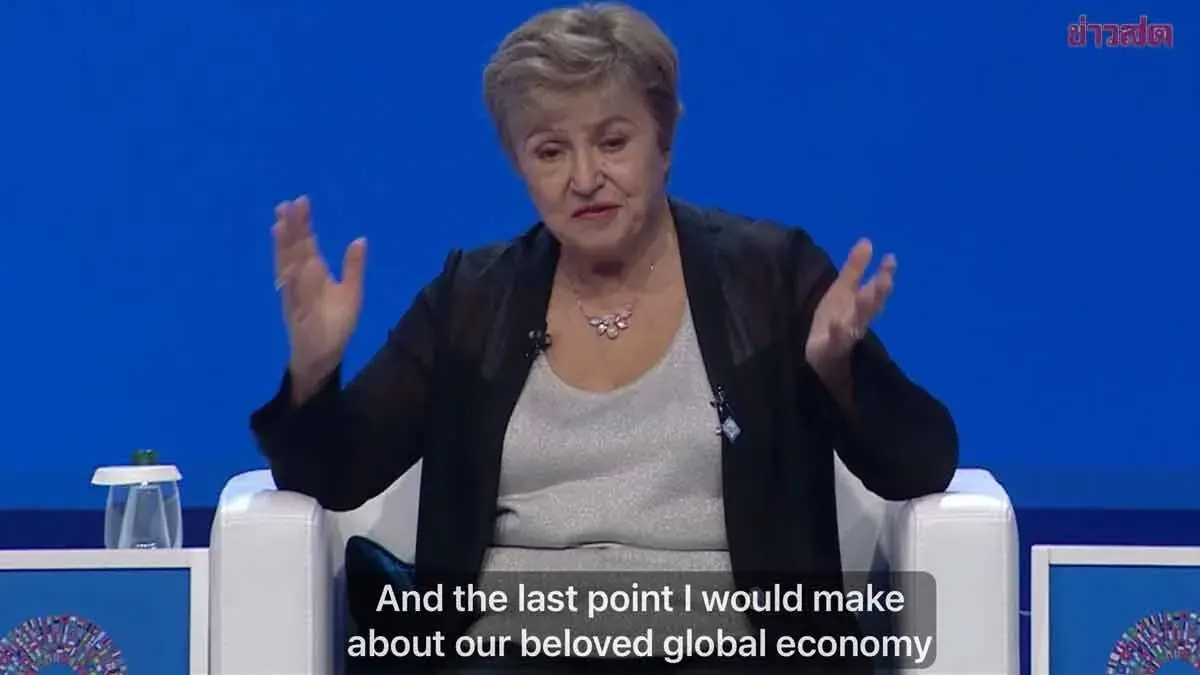
The IMF urged the world to act quickly on AI advancements, advising member countries to adopt disciplined monetary and fiscal policies that do not hinder growth while preparing infrastructure and workforce skills. IMF Managing Director Kristalina Georgieva spoke at the Debate on the Global Economy "Forging Resilient and Dynamic Economics for the Future" during the 81st annual meeting of the World Bank and IMF on October 15, 2026, hosted by Thailand at the Queen Sirikit National Convention Centre in Bangkok. She praised Thailand as an excellent host, urging attendees to travel and spend, supporting local communities and economies. Georgieva noted that the world faces rapid changes that countries cannot wait to address after problems arise, especially economic risks that need advance assessment and technological shifts affecting competitiveness. The IMF closely monitors member countries, using data to gauge economic direction and risks, emphasizing that its role is to warn early so governments can act before situations worsen. Beyond surveillance, the IMF helps members develop economic institutions, design context‑appropriate policies, and share lessons from cases ranging from Greece to Argentina. Members seek to learn effective monetary policy, inflation‑targeting systems, elimination of multiple exchange rate regimes, and fiscal discipline that does not suppress growth. She stressed that stability must go hand in hand with growth, as overly tight fiscal policy can stifle investment and activity, while lack of discipline builds future vulnerabilities. Georgieva added that interest in participating in the AI‑driven economy is rising sharply; even the poorest countries can benefit from AI, whether as producers, suppliers, or users. The concept of "Small AI"—applying AI to specific, real‑world tasks highlighted by the World Bank—shows how technology can expand into agriculture, health care, and education. The key question is not who creates AI, but how each country can use it to boost efficiency and improve services. To help members assess readiness, the IMF has created an AI Preparedness Index that evaluates digital infrastructure, public skills, labor‑market flexibility, ability to expand AI use across sectors, and regulatory and ethical frameworks. These factors show that adapting to an AI‑based economy cannot rely on investment alone.